

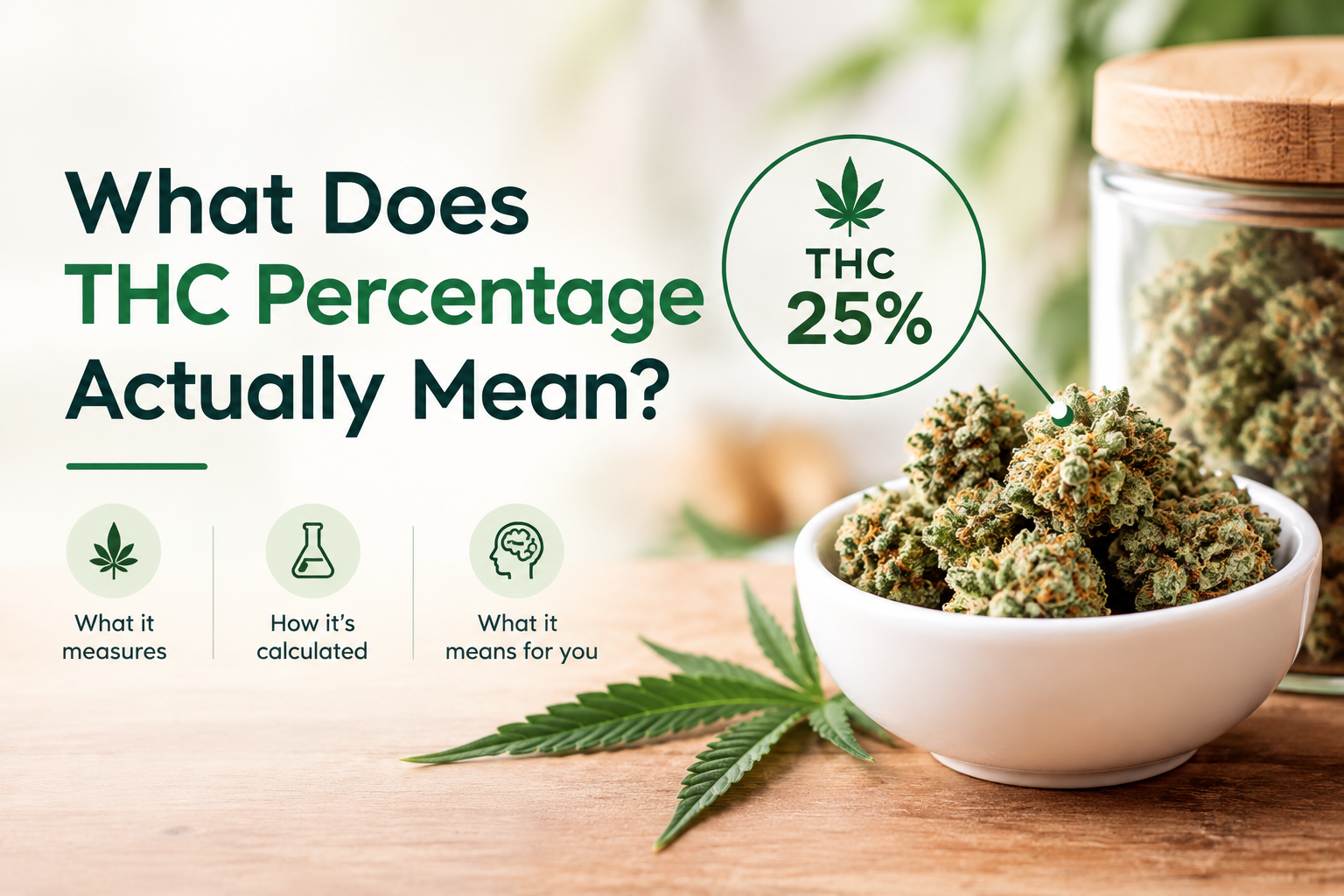
The number on a cannabis label shows how much THC, by weight, is in a product. Flower labeled 25% total THC contains approximately 250 milligrams of potential THC per gram. That is the product's estimated content, not the amount your body absorbs. That's why the THC percentage matters, yet it never tells the whole story. Effects, quality, and your own tolerance count too.
Revert NYC grows its sun-grown flower in New York, and our women-grown, veteran-operated team shares real lab numbers openly. Browse strains and COAs and judge the potency yourself. Be present. Be real.
What Is Your Label Actually Telling You?
Start with the basics: a label that reads 24% total THC means THC makes up 24 percent of the product's dry weight. Take one gram of flower, and roughly 240 milligrams of it is potential THC. Most shoppers treat the THC percentage in weed like a horsepower rating: higher wins. That shortcut feels logical, but it skips a lot.
Labs get that figure by testing a sample from the batch. Results can shift a little from lab to lab, and even from one bud to the next on the same plant. Sunlight, curing, and storage all play a role too. So treat the number as a solid estimate, not a promise carved in stone.
Reading Potency on a Lab Report
Raw flower holds very little active THC, and it holds mostly THCA, a compound that turns into THC when you apply heat, like when you smoke or vape. New York calculates total THC with a simple formula: delta-9 THC plus THCA multiplied by 0.877. The result is total THC, which estimates the potential THC in the product. It does not predict how much your body absorbs or how intense the experience will be.
That's why you should always look for a certificate of analysis, or COA. Revert NYC posts COAs on its website, and its strain pages list THC for each flower. Here's what to scan on any report:
- A batch number that matches your package
- The lab name and test date
- The THCA, delta-9 THC, and final total THC lines
- The terpene profile, when the lab includes one
- Pass results for pesticides, heavy metals, and microbes
Does Higher Potency Always Mean a Stronger High?
Not always. Two flowers that both test at 26% can feel completely different. Terpenes, minor cannabinoids, your tolerance, your mood, and even whether you've eaten all change the experience. Researchers still debate how much the so-called entourage effect matters, but many consumers say aroma and flavor often match how a strain feels.
So treat the THC percentage as one piece of the puzzle. Smart shoppers practice understanding THC levels alongside everything else on the package:
- Terpenes: aromatic compounds that shape flavor and may influence effects
- Strain type: indica, sativa, or hybrid, though these labels work as loose guides
- Your tolerance: a newer consumer and a daily user will read the same number differently
- Freshness: old, dried-out flower loses flavor and punch
Three Potency Myths That Mislead Shoppers
Myth one: the biggest number always wins. Plenty of shoppers chase the highest THC percentage in weed and walk right past fragrant, beautifully cured flower sitting two jars over. Flower that tests in the mid-20s already delivers plenty of punch for most adults, and every extra point rarely changes the experience much.
Myth two: a low number means low quality. Not true either. A 19% flower grown well, dried slowly, and cured with care can smell and taste better than a rushed 30%.
Myth three: every label is equally reliable. Labs differ, so stick with brands that publish batch-specific COAs and stand behind their results.
Pre-Rolls vs. Vapes: Where the Numbers Climb
Pre-rolls look simple, but the number depends on what's inside. A standard one reflects the flower's own potency, so THC levels in pre-rolls usually land close to the flower the maker rolled. Infused versions climb higher because makers add concentrate or kief. Revert NYC sells pre-rolls, infused pre-rolls, and kief-infused ground flower so that you can see that range on one shelf.
Vapes play by different rules. Concentrates often test between 70 and 90 percent, far above flower's typical 20 to 30 percent range. That doesn't make them better, just denser. If you're shopping for a THC vape in New York, start low and go slowly, because inhaled concentrates hit fast. Revert just dropped 2g disposables in six strains, so you've got options to explore.
Finding the Right Dose in Edibles
Edibles flip the math. Instead of a percentage, you read milligrams. New York caps adult-use edibles at 10 milligrams per serving and 100 milligrams per package, so THC per serving is the number to watch on gummies and chocolates. Beginners should start with 2.5 milligrams or less.
Patience matters most here. Effects may begin within 30 minutes to two hours, but can take up to four hours to fully develop, and plenty of people make the mistake of eating more too soon. Wait. Then decide. A few quick rules:
- Start with 2.5 milligrams or less if you're new
- Wait at least four hours before taking more
- Check the label for servings per package
- Store edibles away from kids and pets
Smart Habits for Buying Cannabis With Confidence
Good shopping starts before you reach the counter. Look at the flower itself: dense, sticky buds with a strong, clean aroma usually signal care in growing and curing. Skip anything that smells flat or feels brittle. Ask your budtender what the batch tastes like, not just what it tests at.
Build the habit of understanding THC levels alongside harvest date, terpenes, and the COA, and you'll spot quality fast. Revert's strain pages list THC for each flower, and its Where to Find page points you toward retailers, so you can research first and buy second. Adults 21 and older only.
Read Past the Label Number
A bigger figure means more THC by weight, not a better experience. Check the lab report, weigh the strain's character, and watch THC per serving when you reach for edibles. Once the label stops feeling like a mystery, you'll shop with confidence.
Revert NYC makes that easy. This women-grown, veteran-operated brand offers premium cannabis in New York that's sun-grown, sustainably minded, and backed by COAs that Revert publishes for you to read. Back to the now, one honest label at a time.
Ready to shop? Visit our website and pick up Revert NYC near you.
FAQs
Why does my 28% flower feel milder than a 22% strain?
Tolerance, terpenes, freshness, and your mood all shape the effect you feel. A fragrant, well-cured 22% flower can easily feel richer than a dull, dried-out 28%. Daily use also builds tolerance so that the same strain can feel weaker over time.
What does THCA mean on a COA?
THCA is the raw, non-intoxicating form of THC found in fresh flower. Heat converts it into THC when you smoke or vape. Labs add delta-9 THC to the THCA value multiplied by 0.877 to estimate the total potential THC in the product. That figure describes the product, not how much you will absorb or how strong it will feel.
Where can I find lab results for Revert flower?
Revert NYC lists its COAs under the Resources menu on its website. You can also open any strain page to see that flower's listed THC. Check the batch number on your package against the report so you know you're reading the right results.
How should I pace myself with a high-potency vape?
Take one short puff, then wait several minutes before you try another. Concentrates deliver strong effects quickly, and it's easy to overshoot when you rush. Slow pacing keeps the experience comfortable and helps you learn your own sweet spot.
Why do two pre-rolls with the same label feel different?
Even matching THC levels in pre-rolls can hide differences in terpenes, grind size, and how tightly the joint is packed. Those details change flavor, burn speed, and how the high builds. Freshness matters too, since older flower loses aroma and smoothness.